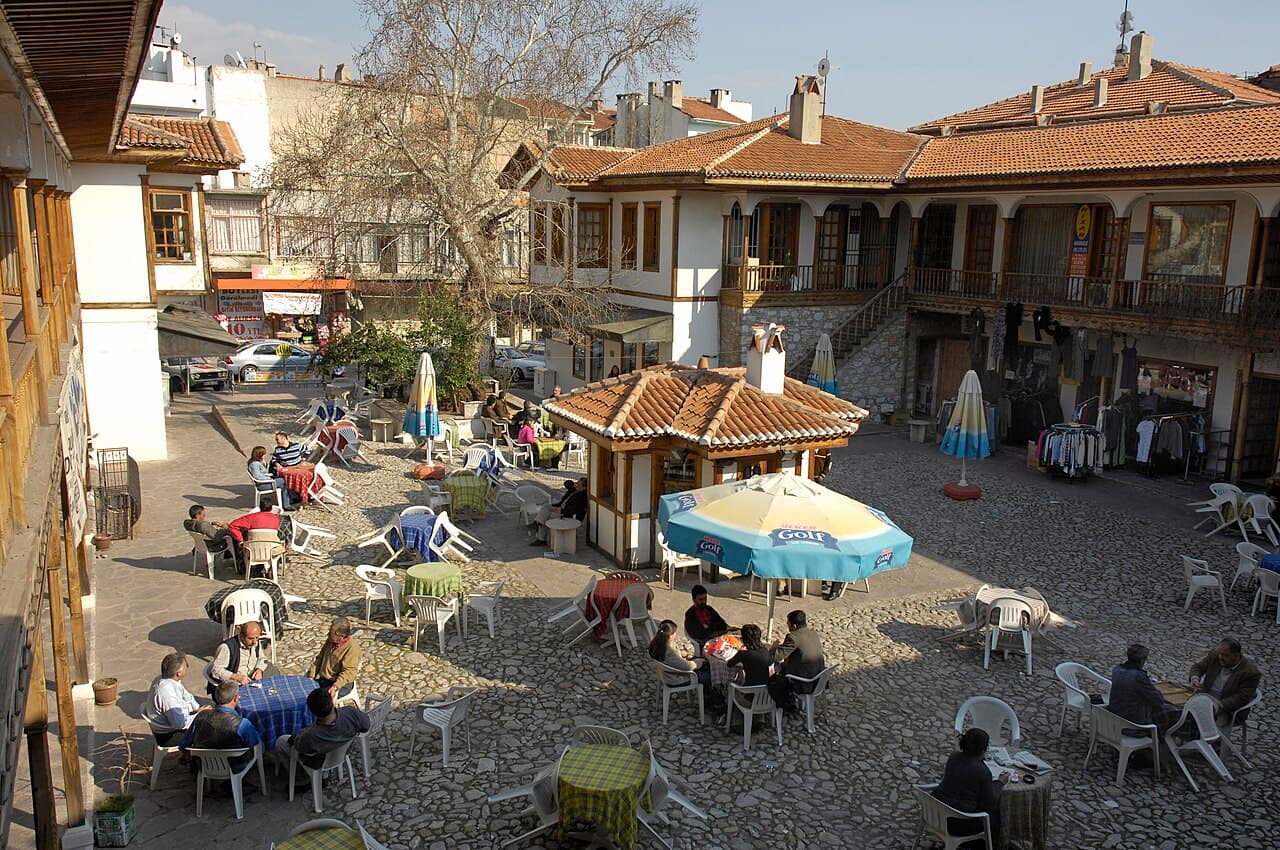
Karabağlar is no ordinary plateau—it's Turkey's only "descended, not climbed" plateau. This is because it sits lower than Muğla city center itself. It earned its name from being higher than the Gökova Gulf.
When Evliya Çelebi visited in 1670, he wrote in his Seyahatname: "Should a stranger wander into this peculiar Karabağlar, he would lose his way. There is never sunlight on the vineyard paths... In the Ottoman realm, only Aspuzi near Malatya or Meram near Konya could compare..." That description still rings true today—in the plateau's interior paths, the tunnel effect created by plane trees and fruit trees still enchants visitors.
The plateau comprises eleven great vineyard areas; its name derives from these very vineyards. Wine was once produced here. Four elements form Karabağlar's architectural and cultural heart:
• Vineyard houses ("Yurtta"): Summer dwellings built within 3.5–5-acre plots, featuring traditional Muğla architecture. Locals call them "yurtta." In spring, Muğlalıs "migrate" to the plateau, spending the summer in farming, livestock, and social life. • Stone walls and pathways (kesikler and irim): Stone boundaries (kesikler) separating the plateau's fields, with narrow paths (irim) between them. This spider-web pattern, formed over centuries or millennia, is Karabağlar's most precious cultural heritage. • Plateau cafes: The plateau consists of over twenty "centers," named after these very cafes. The cafe squares, shaded by 150–200-year-old plane trees, were once the social, commercial, and cultural heart of plateau life: grocer, mosque, restaurant, bakery, butcher, blacksmith, barber all in one. Historic cafes you can still visit today include Bakkallar Kahvesi, Hacı Ahmet Kahvesi, and Gökkıble Kahvesi. Many have become restaurants where you can taste local specialties like büryan kebab, döş, and kapama.