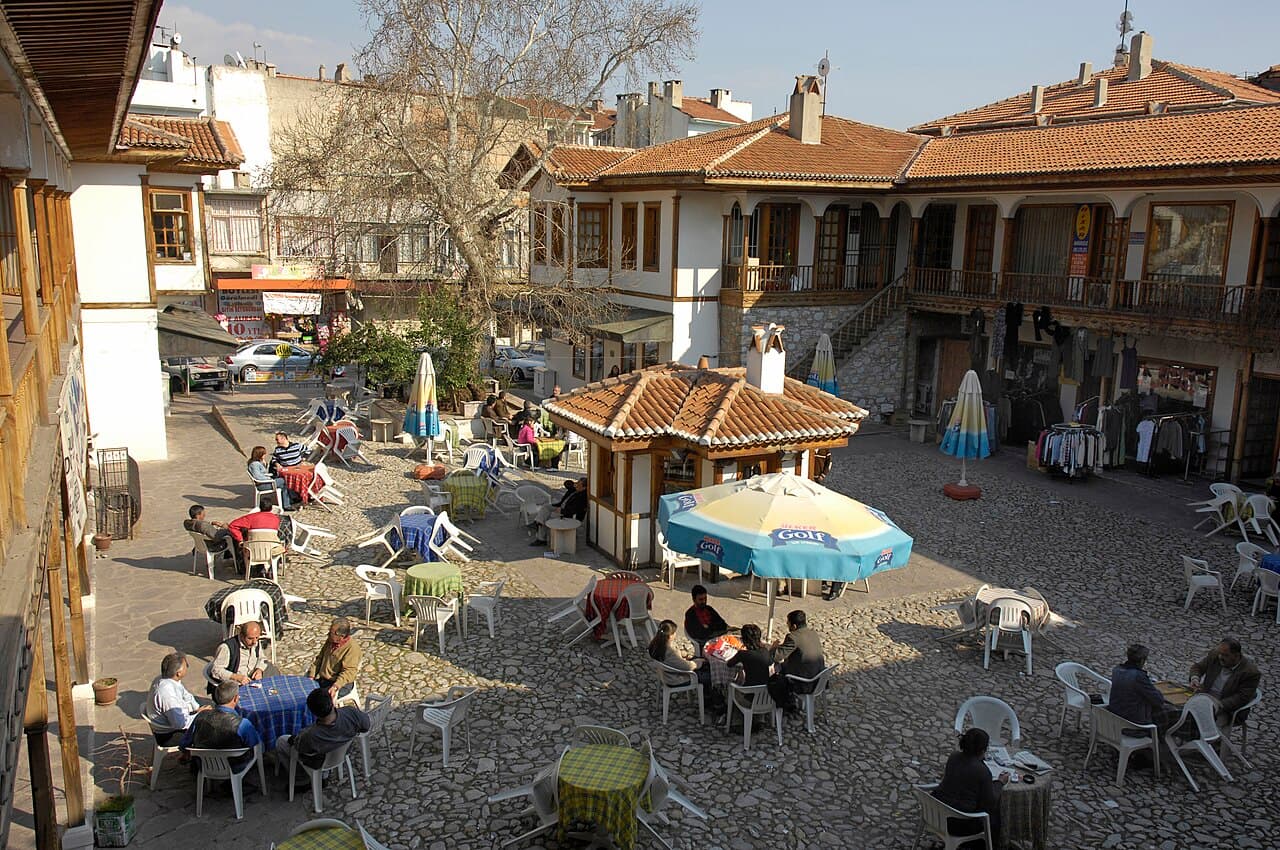
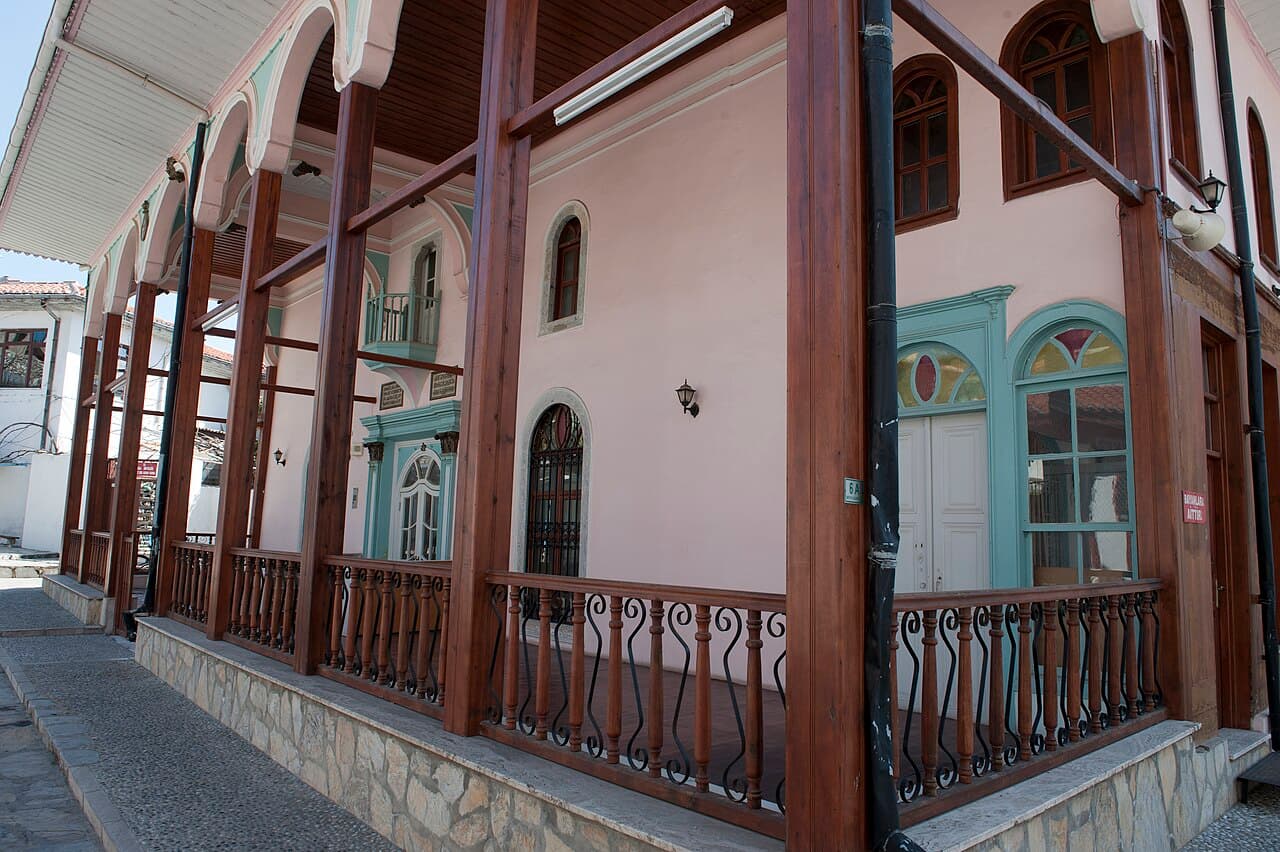
In the heart of Muğla, a history spanning over 530 years awaits you. This mosque was commissioned in 1493 by Esseyyid Şucâeddîn Bey, one of the Menteşe beyliks. The name itself doesn't come from there — it takes its name from the lead cladding of its dome during the major restoration in 1853.
An elegant example of classical Ottoman architecture, the structure was once used as a madrasa as well. In fact, when Evliya Çelebi visited Muğla in 1670, he wrote about this mosque in his Seyahatnâme.
When you step inside, there are two details worthy of your attention: First, the calligraphic ornamental work on the walls — executed with root dyes brought from Rhodes. Second, a truly rare sight: depictions of the Kaaba and sailing ships on the walls. Such figural representations are extremely uncommon in Anatolian mosque art. What's more, the presence of a sailing ship image in the mosque of Muğla—a city with no harbor—recalls the seafaring past of the Menteşe Beylik.