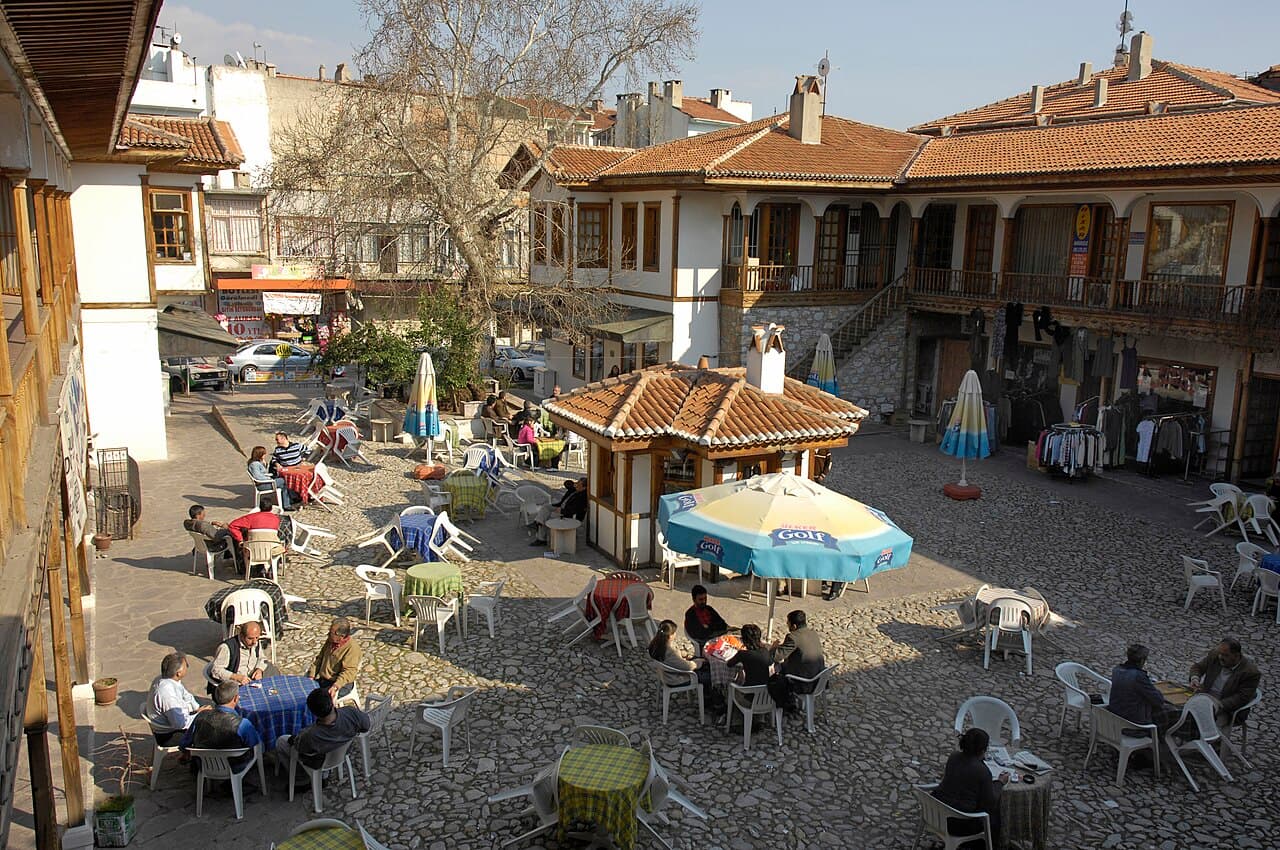
As you climb northward from the Clocktower, you arrive at the city's most authentic fabric — Saburhane. This district, named after a former prison that once stood in this square (from "sabur," meaning patient), is built into the slopes of Asar Mountain.
Saburhane no longer appears in official records as a separate neighborhood, yet this area of over 400 historic houses, inns, bazaar structures, mosques, and fountains has been designated an urban heritage site. Whitewashed walls, red tile roofs, green shutters — and those celebrated "Muğla chimneys," a form rarely found anywhere else in the world.
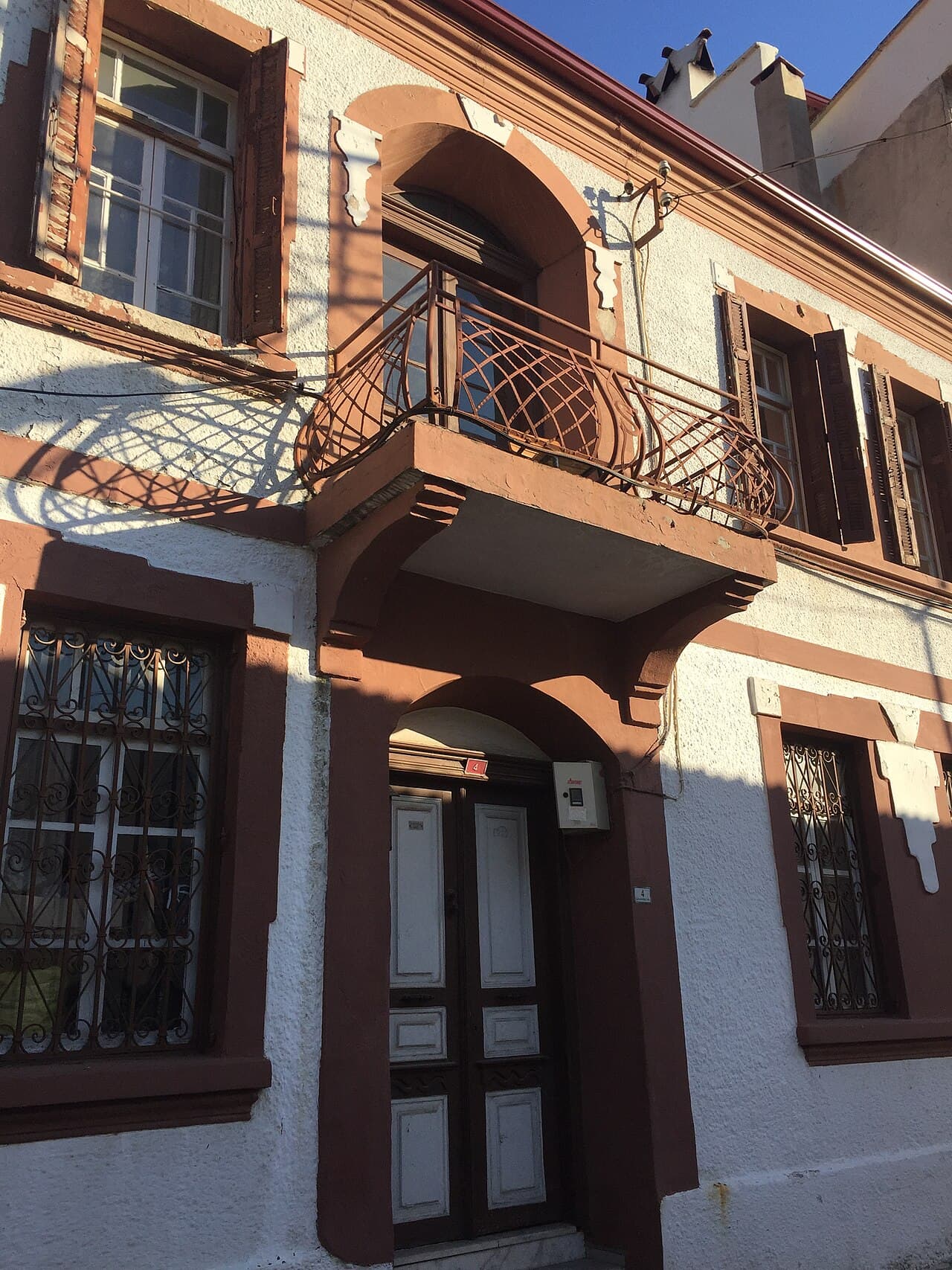
What makes a Muğla chimney special? Unlike conventional chimneys, it features a closed hood on top with small ventilation openings around it. This design blocks rain and snow while preserving the chimney's draft — an elegant and functional architectural solution found only in this region.
Other characteristic features of these houses include open or covered front sofas, wood-ornamented verandas, built-in cupboards and bathrooms set into walls, and spacious inner courtyards called "hayat."
As you walk the streets, notice the details: door knockers (mostly 19th-century woodwork), bay windows (enclosed wooden balconies projecting from upper floors onto the street), and original Ottoman stone paving.