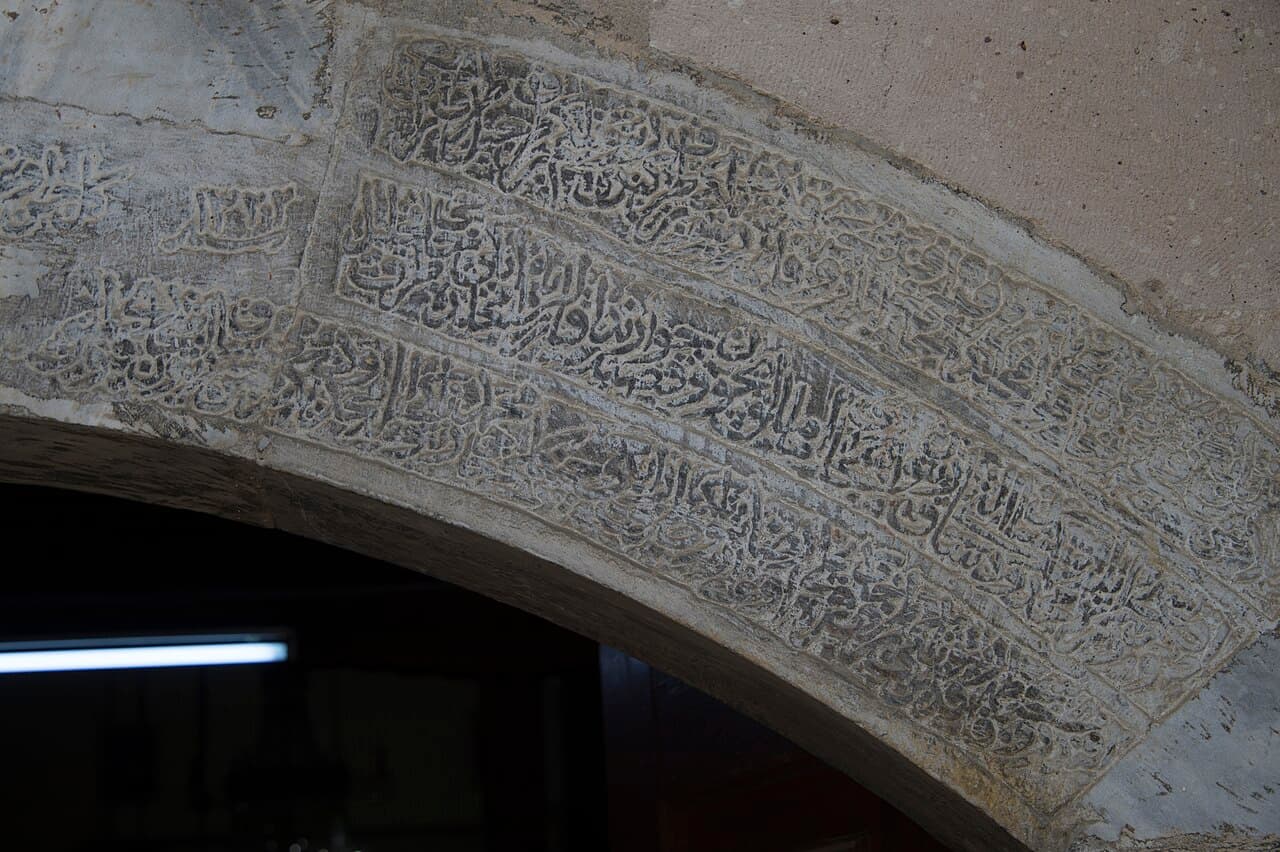
Built in 1394 by Firuz Bey, the Ottoman governor of Menteşe, this mosque stands as Milas's finest surviving monument from the Beylik period. Its architect was Hasan bin Abdullah.
The mosque is locally called "Kurşunlu"—the Lead Mosque—because its dome is covered in lead. But when the traveler Evliya Çelebi visited Milas in the 17th century, he gave it a different name: "Gök Cami," the Sky Mosque. That's because the structure was built from bluish-grey veined marble quarried from Sodra Mountain. In certain angles of sunlight, the facade truly shimmers in the tones of the sky.
The building follows the classical Beylik-era mosque plan: a single dome, square-planned prayer hall, and a portico at the entrance. To the south are madrasa rooms—making this not just a mosque, but an entire educational complex.
In the mosque courtyard stands the turbe (mausoleum) of Firuz Bey's wife, which you can visit. The wooden craftsmanship details, mihrab decorations, and a double-headed eagle figure carved into the wall are architectural features well worth observing closely.