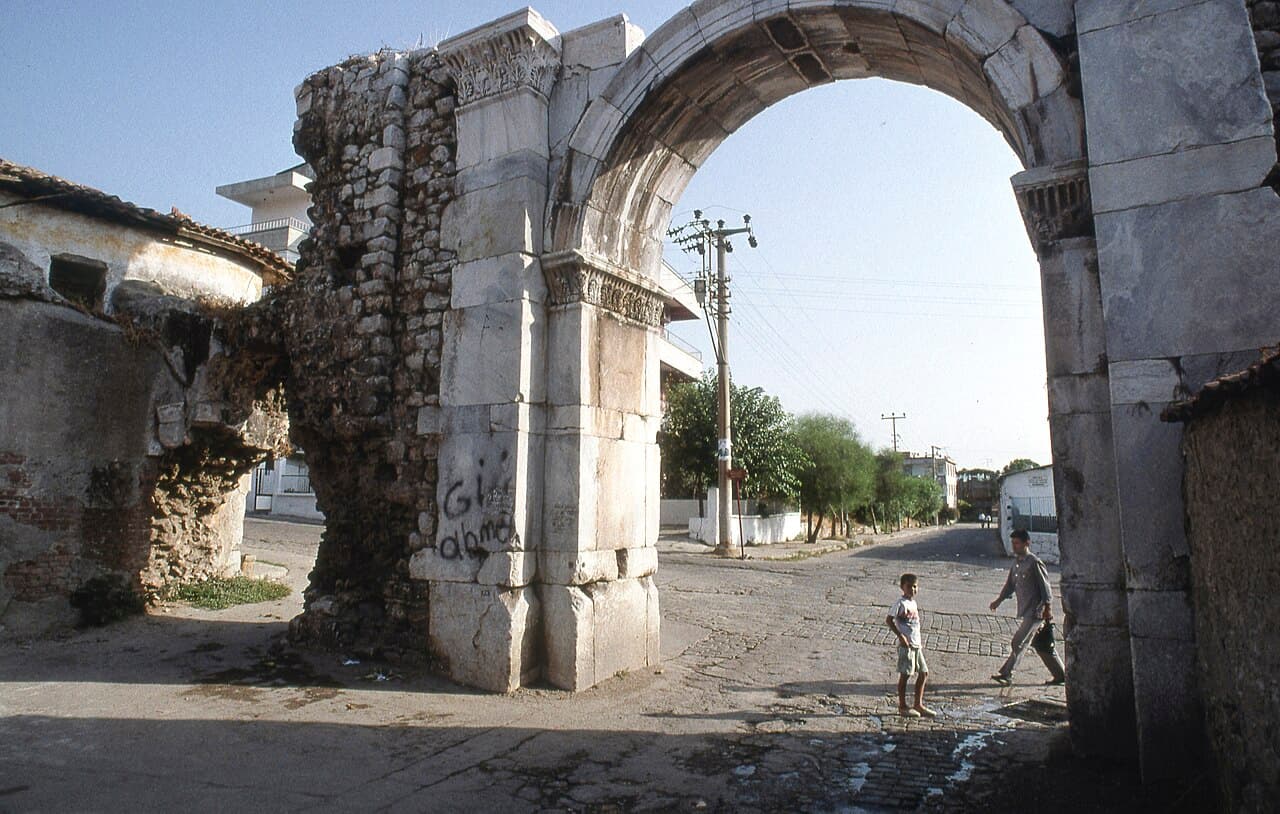
The arched gate you see before you is the only surviving section of fortifications from ancient Mylasa to reach our time. Its construction dates to the late 1st century BCE; built at the beginning of the Roman period.
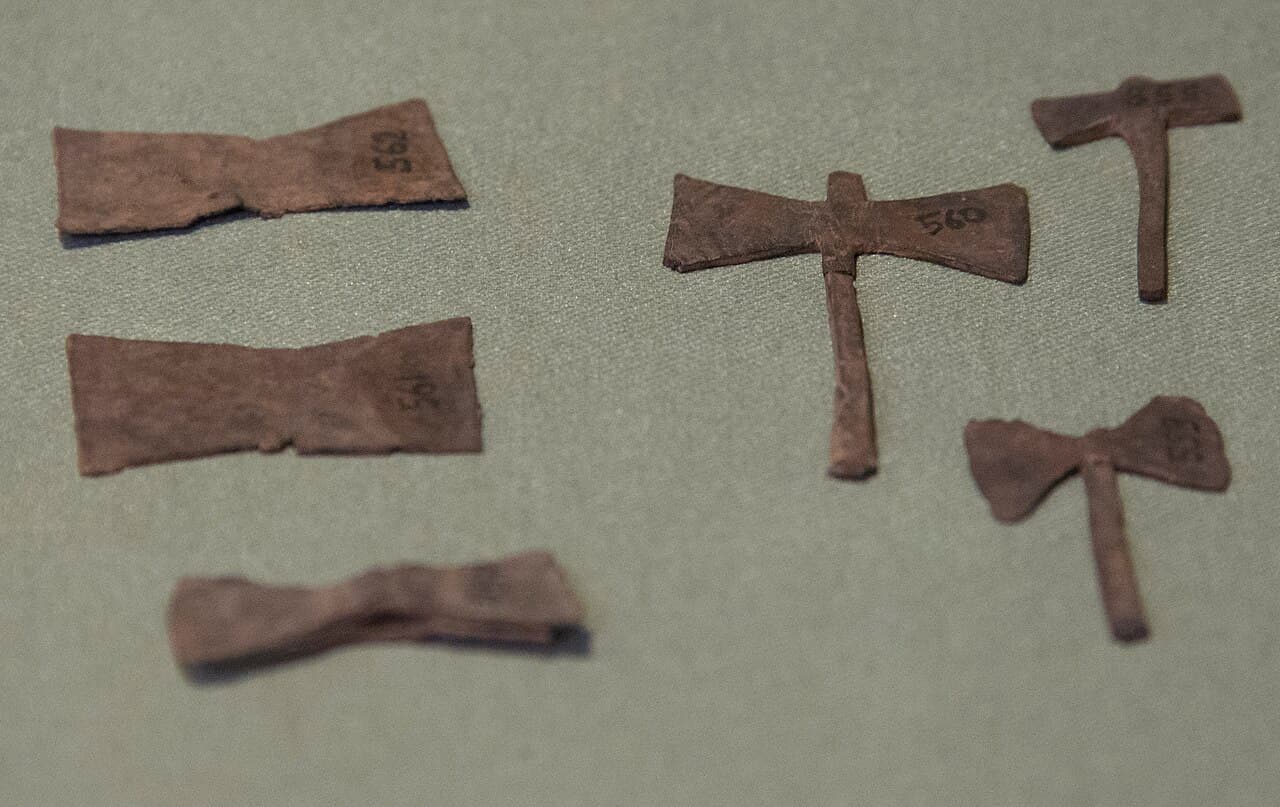
The gate's true claim to fame is the relief of a double-headed axe carved on the arch's keystone. In ancient Greek, this axe is called "Labrys"—which is actually the root of the word "labyrinth." This axe is no mere decoration; it is the symbol of Caria's sacred god, Zeus Labraundos. In other words, you are standing not before an ordinary gate, but before a sacred threshold.
This gate was the starting point of the route for the Zeus Labrandos Festival, held annually in antiquity. Pilgrims departing from the city would follow the 14-kilometer Sacred Road up the mountainside to the sanctuary of Labraunda. So Baltalı Kapı is not just a piece of architecture—it is the beginning of a sacred pilgrimage.
In the early Christian period, aqueducts bringing water to Milas from the east were connected to this gate. Today you can still see the traces of these aqueducts beside the gate. The two pillars supporting the arch have capitals decorated with palmettes and fluting; though the upper structure was destroyed over the centuries, the remaining sections showcase the mastery of Roman architecture in Anatolia.